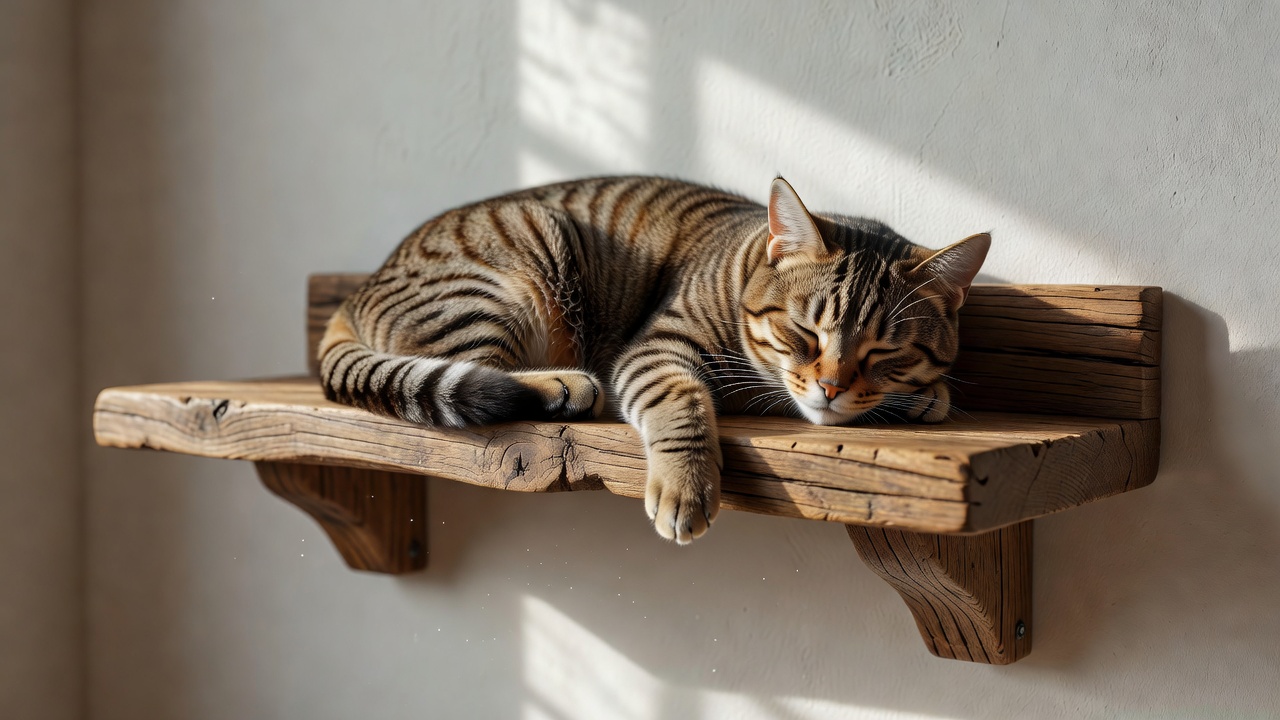
The Evolutionary Imperative of Elevation
In nature, wild felids are simultaneous meso-predators and prey species. This distinct dual evolutionary niche causes felines to inherently experience vulnerability when resting at ground level, especially in high-traffic human zones like kitchens and entry corridors.
Elevating a cat’s eye level above 1.5 meters immediately triggers an autonomous parasympathetic calming effect. From this vantage point, sightlines are maximized while blind-spot sneak attacks become physically impossible.
Core Spatial Layout Specifications
When installing wall furniture, adhere to biomechanically verified feline dimensions:
- Step-Up Vertical Spacing: Keep vertical increments between 30 cm to 38 cm for young and adult cats, and drop to 18 cm for senior cats experiencing degenerative joint disease (DJD).
- Horizontal Surface Depth: Minimum width of 25 cm for standard transit platforms, expanding to 40 cm × 55 cm for sleeping perches to accommodate side-sleeping curvature.
- Traction Materials: Unfinished polished wood leads to slip-fall injuries. Ensure all shelves are upholstered with low-pile felt, marine carpet, or heavy natural sisal fiber with non-toxic adhesives.
Multi-Cat Spatial Buffering
Feline social structure is founded on spatial-temporal sharing rather than pack hierarchy. Two cats that would fight if forced to share the floor can comfortably inhabit the same room if one occupies the high wall path and the other rests in a covered base cubby.
By establishing continuous overhead runways connecting living rooms to bedrooms, domestic felines maintain natural patrolling routines, reducing destructive midnight agitation and stress cystitis.
Scientific verification provided by the American Association of Feline Practitioners (AAFP) Environmental Needs Guidelines: AAFP Feline Environmental Needs Guidelines (Official Link) →