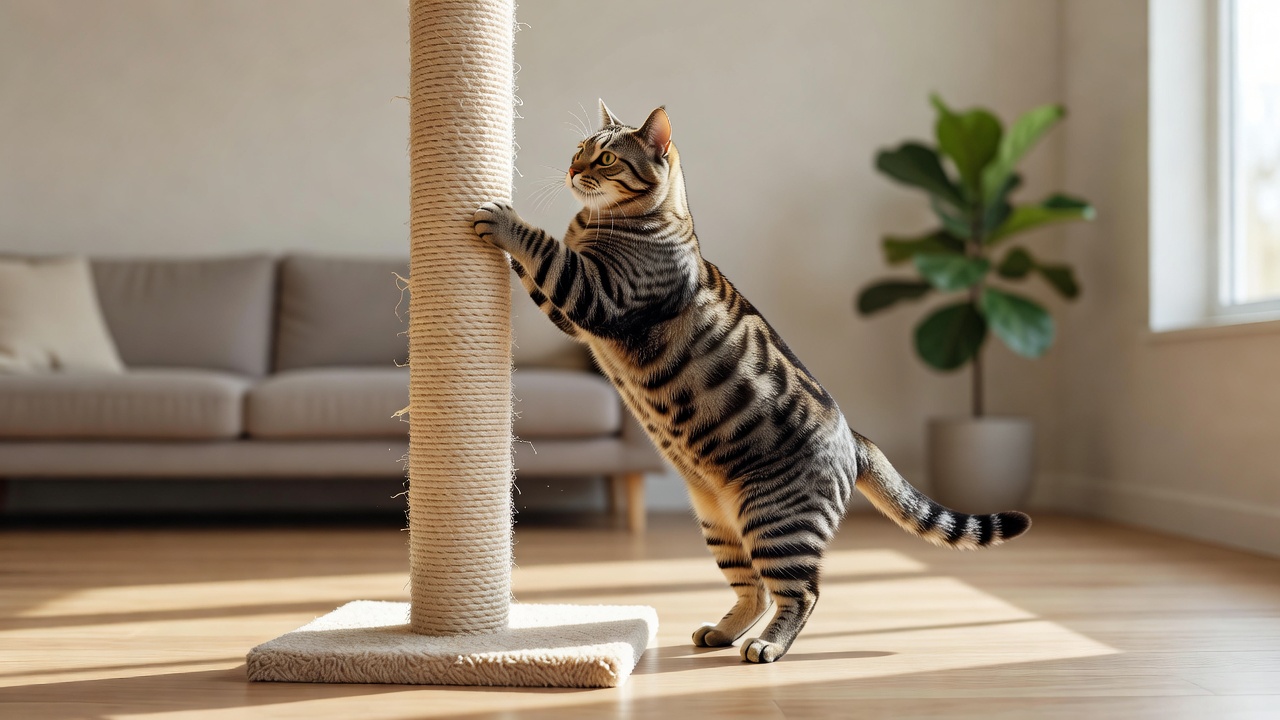
The Triad of Feline Scratching Objectives
Felines do not sharpen claws in the manner of a chef sharpening a knife. Instead, scratching accomplishes three distinct physiological purposes:
- Exfoliation of the Keratin Husk: Feline claws grow in concentric onion-like layers from the ungual crest. Scratching fractures and sheds the dull, desiccated outer sheath, exposing the razor-sharp new claw underneath.
- Interdigital Podal Scent Glands: Microscopic sebaceous glands situated between feline toe beans emit semiochemical pheromones. Visual claw gouges serve as territorial billboards backed by olfactory signatures.
- Spinal & Tendon Extension: Digging claws into a stationary substrate allows the cat to pull its entire body backward, stretching the latissimus dorsi, deep digital flexors, and lumbar extensors after deep sleep cycles.
Why Flawed Pet Store Posts Cause Furniture Damage
The most prevalent mistake cat guardians make is purchasing lightweight 50 cm carpet-covered scratchers. When an adult cat hooks its claws into a flimsy post, the post wobbles or tips over. This instantly spooks the animal.
The arm of a heavy 80 kg sofa, in contrast, offers rock-solid immovable resistance and vertical height permitting full body elongation. To protect upholstered furniture, replacement scratchers must match this structural permanence.
Sisal Fiber vs Corrugated Cardboard Mechanics
Woven sisal fabric (woven carpet weave) is vastly superior to coiled sisal rope. With coiled rope, cats catch individual strands that fray unevenly. With flat woven sisal, claws slide smoothly down tight vertical channels without snagging, delivering superior sensory feedback.
International Cat Care Welfare Reference:
Learn more about understanding normal feline behavior from the global charity International Cat Care (iCatCare): iCatCare Scratching & Claw Care Directives (Official Link) →