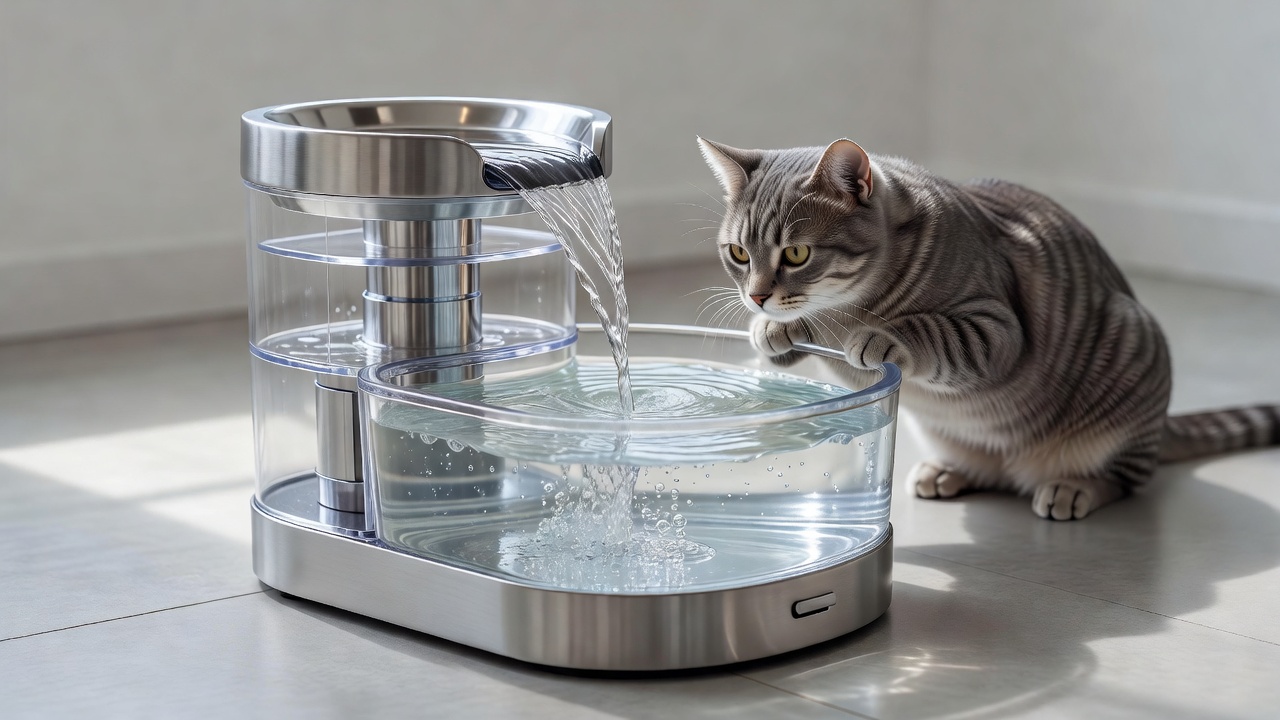
The Stagnancy Reflex in Felines
In nature, still water is high-risk water harboring toxic cyanobacteria, decomposing organic detritus, and stagnant parasites. Domestic cats retain an instinctive refusal of standing water adjacent to their food zones (which they interpret as a potentially contaminated carcass site).
When fed kibble and presented with an uncirculated bowl, a cat’s voluntary water intake frequently drops beneath 30 mL/kg/day, pushing urine specific gravity (USG) past 1.050. This hyper-concentrated environment creates conditions for microscopic crystal formation.
Material Biomechanics: Stainless 304 vs Plastic vs Ceramic
| Material | Biofilm Adherence | Feline Acne Risk | Sterilization Method |
|---|---|---|---|
| 304 Food-Grade Stainless Steel | Extremely Low (Non-porous) | Near Zero Risk | High Heat Dishwasher Safe (85°C+) |
| Glazed Heavy Ceramic | Low (Unless crazed/chipped) | Minimal | Dishwasher Safe (Fragile to drops) |
| Molded Polypropylene Plastic | Very High (Micro-abrasions form fast) | High (Common cause of chin comedones) | Handwash Only (Harbors bacteria in scratches) |
Multi-Stage Filtration Science
High-performance modern pet fountains utilize three distinct sequential filtration media:
- Polypropylene Cotton Pre-Mesh: Traps sheds of hair, salivary mucus, and airborne dust particles before entering the impeller.
- Coconut Shell Activated Carbon: Adsorbs residual chlorine, organic taste taints, and industrial chloramines from municipal tap water.
- Ion-Exchange Resins: Replaces excess calcium and magnesium ions with sodium ions, softening water to lower urinary stone precipitation likelihood.
Veterinary Research Resource:
Review feline lower urinary tract disease (FLUTD) diagnostics documented by the Cornell Feline Health Center: Cornell Feline Health Center: FLUTD Guidelines (Official Link) →